Part 1: The Birthday Girl Who Was Denied a Cupcake
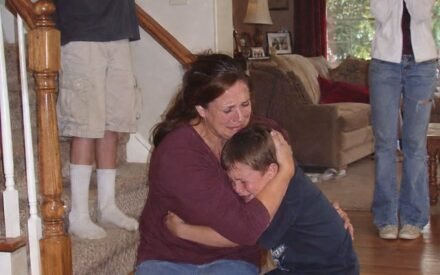
My daughter Josie was celebrating her eighth birthday when my sister-in-law, Rhonda, abruptly stopped her from taking a cupcake. The party room was bright with decorations, buzzing with excited kids, and crowded with dessert tables, yet the birthday girl seemed to be the only child not allowed to enjoy any of it.
I’d spent $2,500 putting together what I hoped would be an unforgettable celebration. Twelve children had gathered beneath a pink balloon arch spelling out her name, helping themselves to brownies, cookies, birthday cake, and chocolate-dipped strawberries.
Josie walked up to the dessert table with an empty plate and reached for a cupcake. Before she could pick one up, Rhonda draped a napkin over the tray and spoke loudly enough for the parents nearby to hear.
“You can’t eat any of this, Josie. Ask your mother to bring you something.”
My daughter froze, confused and embarrassed. When she quietly asked why, Rhonda smiled at the other adults and said I already knew the reason.
I crossed the room before Josie could apologize for something she hadn’t done. Rhonda dropped her voice and warned me not to make a scene, insisting we’d already agreed on this arrangement.
But our earlier conversations had covered only the menu, the decorations, and Josie’s favorite cake flavor. Rhonda had handled the venue booking because she knew someone who worked there, but I had never approved any limits on what my daughter could eat.
My husband, Dan, stood nearby, pretending to be absorbed in his phone. When I asked him to tell his sister that Josie could have a cupcake, he suggested we talk about it privately outside.
His reluctance made me suspicious at once. He seemed more concerned with dodging a confrontation than helping our child. Josie stayed beside me, pressing her empty plate to her chest while the other kids kept eating.
Then I noticed a second cake behind Josie’s. It was taller, decorated with gold musical notes, and carried a congratulatory message for Rhonda’s eleven-year-old son, Caleb.
Caleb had recently been accepted into a competitive summer music program. I was happy for him, but I had never agreed to merge his celebration with Josie’s birthday.
Gift envelopes ringed Caleb’s cake, and unfamiliar adults wearing visitor stickers from his music school were mingling with our guests. It dawned on me that Rhonda had invited people with no connection to Josie’s party.
“Why are Caleb’s music-school guests at my daughter’s party?”
Rhonda tried to steer me away, claiming my questions were upsetting the children. I stepped aside and looked at Josie, who was fighting back tears.
“It’s okay, Mommy. I can wait until we get home.”
Hearing my daughter offer to go without food at her own birthday turned my frustration into resolve. I handed her plate to Dan and addressed the adults gathered near the desserts.
“I paid twenty-five hundred dollars for this party. Before anyone eats anything else, I want the manager to explain why the birthday girl isn’t allowed to eat.”
The room went silent, and Rhonda’s confident smile vanished. She ordered me to sit down, but I ignored her and asked for the venue manager.
A woman named Teresa arrived with a clipboard and listened carefully to my account. After checking the reservation, she told me a written restriction had been included in the booking instructions. She turned the paperwork toward me, and a single sentence made my stomach clench.
Birthday child must not be served. Mother will provide separate food.
Beneath it was my husband’s signature. When I looked at Dan, his face told me the situation was far more complicated than Rhonda had admitted.
Part 2: The Sixteen-Hundred-Dollar Deception
I held the reservation paperwork up in front of Dan and demanded to know why he’d signed a document keeping our daughter from eating at her own party. He insisted Rhonda had filled out the forms and that he’d signed several pages without reading every detail.
Rhonda immediately claimed the restriction was meant to protect Josie from food allergies. The excuse was absurd. Josie had no known allergies, and I’d personally approved every dessert.
My mother-in-law, Barbara, tried to intervene, arguing this discussion shouldn’t happen in front of guests. I refused to accept that. Josie had already been humiliated publicly, and the adults responsible were trying to dodge accountability.
Teresa suggested moving the conversation away from the children, and I agreed, as long as Josie stayed beside me. Then Teresa found an extra page describing the event as a joint celebration of Josie’s birthday and Caleb’s acceptance into his music program.
I had never approved that. Rhonda defended herself by saying cousins should share important occasions, and I pointed out that she’d just refused to let Josie share the food.
Dan admitted he’d meant to tell me about the second celebration. When I asked when, he had no convincing answer.
Two weeks earlier, Rhonda had quoted a total cost of $2,500. Because the venue supposedly required payment on Dan’s card, I’d transferred the full amount to my husband.
I asked Teresa to confirm what the venue had actually charged. She checked the invoice and explained that the decorations, catering, and room totaled just $900 under a discounted weekday package.
“Nine hundred dollars? Then where did the other sixteen hundred go?”
Rhonda grew visibly uncomfortable, while Dan tried to talk me into postponing this until we got home. I refused. The missing money belonged to our household, and the explanations were getting more suspicious by the minute.
Finally Rhonda admitted the extra $1,600 had paid Caleb’s music-program deposit. She claimed Dan had offered to help because the family couldn’t afford it.
I turned to my husband, stunned that he’d secretly redirected money meant for our daughter’s birthday. His answer confirmed it had been deliberate.
“You would have said no, Anna.”
He was right, though not because I wanted to deny Caleb an opportunity. Two weeks earlier Rhonda had already asked for $1,600, and I’d refused, because Dan and I had just covered her overdue electric bill and chipped in for Caleb’s school trip. I’d told Dan we couldn’t keep helping financially without first discussing our own budget. Instead of respecting that, he and Rhonda had invented a pricier birthday package and used the difference for Caleb.
The financial deception was infuriating, but it still didn’t explain why Josie had been shut out of the food. I pressed Rhonda again, and she insisted I was supposed to bring something separately for my daughter.
When I said nobody had told me that, she claimed she’d explained everything to Dan. He immediately contradicted her, saying she’d described the restriction as a clerical error that had already been fixed.
Teresa asked for the catering supervisor’s tablet so she could review the instructions sent to staff. Rhonda tried to block her, saying the messages were private.
Just then Dan received a text from his sister and quickly lowered his phone. I demanded to see it, and after hesitating, he unlocked the screen.
Take Anna outside now. We can’t let her see the organizer’s notes.
I looked at Teresa, who had already found the messages. Her expression turned grave.
Part 3: The Plan to Humiliate My Daughter
Teresa turned the tablet toward me. An organizer’s note described me as emotionally unstable and likely to disrupt the party. It instructed staff that if I questioned the food arrangements, they should escort me outside while Dan stayed inside with Josie. The final sentence claimed my husband had agreed to this procedure.
When I confronted him, Dan admitted he’d agreed to talk with me privately if a disagreement came up, but denied authorizing anyone to remove me. He insisted he hadn’t known Rhonda would call me unstable. I told him his willingness to cooperate had handed his sister the chance to misrepresent me to the staff.
Rhonda tried to wave the whole thing away, insisting Caleb deserved recognition. I told her his success didn’t justify taking money from Josie’s party or humiliating an eight-year-old.
Teresa arranged for the children to keep enjoying refreshments in an adjoining lounge. When one of Josie’s friends asked if she could join them, I crouched beside my daughter and reassured her she’d done nothing wrong.
“You’re allowed to enjoy your birthday food, sweetheart. Nobody should have told you otherwise.”
Josie’s expression shifted, and she quietly explained that Rhonda had told her I didn’t want her eating anything. Her aunt had also warned that asking for food would make me angry and send everyone home.
I hugged her tightly, devastated that she’d been manipulated into believing she was responsible for protecting the party. Her silence made sense now. Rhonda had deliberately tied Josie’s needs to the threat of upsetting her mother.
Teresa gently offered Josie a cupcake, and my daughter asked whether she could pick the pink one. Once she had it, she joined her friends in the lounge while I kept talking with the adults.
I asked Rhonda why she’d created such a cruel restriction. She finally admitted she resented how much attention Josie got, especially when Caleb had achieved something she considered just as important.
“Everything always has to be about Josie.”
I stared at her, struggling to believe she was criticizing a child for being the center of attention at her own birthday. When I suggested a separate celebration for Caleb, Rhonda angrily demanded to know how she was supposed to pay for it. Then she admitted that Dan had proposed combining the two events. Their intention had been to use the money I provided without telling me how much went to Caleb.
Teresa pulled up the original reservation correspondence, which showed Rhonda had booked the discounted package before sending us a description of a supposedly premium celebration. The expensive package had never existed. The inflated price was entirely Rhonda’s invention.
More disturbing, Josie’s food restriction had been submitted the evening before the party. The message claimed I’d withdrawn permission for my daughter to take part in the shared meal. There was no mention of allergies or medical concerns. It was framed as my personal decision, so the staff would blame me rather than Rhonda when Josie asked for food.
I demanded to know why, and Rhonda finally revealed her motive.
“Because you need to understand what happens when you stop helping your family.”
Her answer confirmed that the humiliation had been deliberate retaliation for my refusal to provide another loan. She’d targeted Josie because she believed hurting my daughter would punish me more effectively than another argument about money.
Dan sat down heavily, admitting he’d believed they were simply helping Caleb. I reminded him that he’d hidden the transfer, signed paperwork without reading it, and stayed silent when Josie needed him. For once he stopped making excuses. When Barbara tried to defend Rhonda by citing her financial difficulties, Dan cut his mother off and said the excuses had to end.
Part 4: The Party Rhonda Couldn’t Ruin
Dan asked Teresa for copies of the reservation documents and correspondence, then opened his banking app to show me the transaction history. The records confirmed he’d transferred $1,600 to Rhonda the morning after I gave him the money for Josie’s party. He promised to recover the funds and repair the damage. I told him repayment was only the beginning, because our daughter needed to hear the truth from her father.
Teresa told Rhonda she could stay only if she stopped interfering with staff and guests. Rather than accept those terms, Rhonda gathered her things and announced she was leaving.
Caleb stood beside his cake, embarrassed and confused by the confrontation. I went to him before he followed his mother, because I wanted him to know he wasn’t responsible for the adults’ decisions.
“Congratulations on getting into your music program, Caleb. You’ve worked hard, and none of this is your fault.”
He nodded quietly. I returned to the lounge, where Josie sat with her friends, carefully holding her pink cupcake, unsure whether the celebration would continue. When she asked if her party was over, I reassured her at once. We brought her cake into the lounge, gathered the children around the table, and carried on with the celebration she deserved.
The kids sang with enthusiasm while Josie smiled beneath the bright decorations. When she closed her eyes to make a wish before blowing out her candles, I felt relieved that we’d managed to save part of her day.
Later Dan knelt beside Josie. He told her Rhonda had lied about my wishes and admitted he should have stepped in the moment she was denied food.
“Aunt Rhonda told you something that wasn’t true. Mommy wanted you to enjoy your birthday, and I should have helped you.”
Josie looked at him seriously and asked why he hadn’t spoken up. Dan hesitated, then admitted he’d been afraid of starting an argument with his sister.
“I was worried we’d fight, and I made the wrong decision.”
Our daughter listened without answering right away. When Dan reached toward her, she didn’t move closer, and he respected that instead of pressuring her to forgive him.
I appreciated that he was finally owning his responsibility, but an apology couldn’t erase his choices. He’d let his sister manipulate our finances and humiliate our daughter because confronting her seemed inconvenient.
That evening Josie and I went to stay with my sister. I needed time to think about my marriage without feeling pushed to accept an apology before I knew whether Dan was willing to change.
Over the following weeks he demanded that Rhonda repay the missing $1,600 and supplied the reservation records to back him up. Eventually she returned the full amount, though the repayment did nothing to restore my trust in her. Dan also separated his automatic payments from our joint account and gave me complete access to our financial statements. He began individual counseling to understand why he’d repeatedly put avoiding conflict with his relatives ahead of protecting his own family.
After several sessions on his own, he asked me to join marriage counseling, and I agreed. But I promised nothing about reconciliation, because rebuilding trust would take consistent behavior, not tearful apologies.
Rhonda was no longer allowed to spend time with Josie. I wouldn’t expose my daughter to someone who’d deliberately used her hunger and embarrassment to punish an adult.
The party was over, but I soon found that its effects had followed Josie home. The clearest sign came during an ordinary family meal several weeks later.
Part 5: The Slice of Pizza That Meant Everything
A month after her birthday, Josie invited two friends over for pizza. The afternoon was relaxed and cheerful, and I was grateful to see her laughing easily with other kids again.
While I sliced the pizza in the kitchen, Josie came up to the counter and stood quietly beside me. She watched me arrange the pieces on a serving tray, then asked a question that instantly took me back to her party.
“Mommy, do I have to ask before I take a slice?”
I looked at her and realized Rhonda’s behavior had left a deeper mark than I’d understood. Even at home, surrounded by friends, Josie wasn’t sure she could eat without special permission.
I handed her a plate and told her she could take a slice whenever she was hungry. She studied the tray, chose the biggest piece, and carried it off to her friends. For the first time since her birthday, she didn’t glance back to see whether an adult would stop her. That small moment filled me with relief and sadness at once, because something as ordinary as taking food had become a source of anxiety for my daughter.
I’d first thought the worst betrayal was the $1,600 Dan secretly sent to Rhonda. The money mattered because it meant dishonesty and a breach of our agreement to make financial decisions together. But it wasn’t the most painful part. What hurt most was remembering Josie standing beneath her birthday decorations with an empty plate, watching other children eat food bought for her celebration while her aunt deliberately made her feel unwelcome.
Rhonda had understood exactly how to exploit Josie’s eagerness to please the adults around her. By claiming I’d be angry if she asked for food, she’d convinced my daughter that voicing a basic need might ruin everyone’s afternoon. That manipulation was especially cruel because Josie had done nothing to deserve it. She was an eight-year-old who wanted to enjoy her birthday with her friends.
Dan’s silence made it worse, because Josie trusted her father to protect her. Instead of confronting his sister immediately, he’d tried to move the disagreement away from the guests and avoid an uncomfortable scene. In counseling he acknowledged that his fear of conflict had shaped his choices again and again. He’d spent years trying to keep his mother and sister satisfied, often agreeing to their requests because refusing felt harder than quietly sacrificing our family’s interests.
I told him that avoiding an argument could never justify letting our daughter be mistreated. Protecting our marriage required honesty, even when that honesty disappointed his relatives.
The counseling sessions were hard, and there were moments I doubted whether rebuilding was possible. Still, I kept judging Dan by his behavior rather than accepting promises as proof of change. He began discussing financial decisions openly and stopped helping Rhonda without consulting me. More importantly, he gradually learned to set boundaries without expecting me to be the one who confronted his family.
I also spent time helping Josie understand that adults sometimes make unfair decisions and that those decisions say nothing about her worth. I wanted her to feel comfortable asking questions, voicing discomfort, and telling us whenever someone made her feel ashamed. We talked about the party without making her relive every painful detail. I reminded her she was never responsible for the disagreement and deserved kindness no matter how other adults behaved. Over time she grew more confident about expressing her needs. She started speaking up when something bothered her, and I made sure to listen without brushing her concerns aside.
I didn’t know whether my marriage would survive the damage of Dan’s deception. Forgiveness remained possible, but I refused to confuse it with forgetting or pretend trust could return overnight. What I knew for certain was that Rhonda would never again get the chance to use Josie as leverage in a money dispute. Her resentment had shown a willingness to hurt an innocent child, and that was a line I would not compromise on.
Looking back, I sometimes think of the moment Teresa offered Josie the pink cupcake. My daughter’s cautious smile reminded me how little it takes to make a child feel included, and how deeply it wounds when an adult deliberately takes that feeling away.
The party began with deception, humiliation, and a painful discovery about people I trusted. Yet it forced me to see that protecting my daughter sometimes meant facing uncomfortable truths about my own family. For years I’d tried to keep the peace with Dan’s relatives, even as their financial demands grew unreasonable. That birthday taught me that peace bought with silence can become another kind of harm when it lets someone vulnerable be mistreated.
Now, whenever Josie reaches for a snack or asks to invite friends over, I remember the little girl who once believed she needed permission to enjoy her own birthday food. I want her to grow up knowing she deserves respect, that her feelings matter, and that she never has to apologize for ordinary needs.
The most meaningful part of that ordeal wasn’t recovering the money or exposing Rhonda’s deception. It was watching Josie regain the confidence to take a slice of pizza without looking over her shoulder. As she carried that enormous slice toward her laughing friends, I realized the party had taught us both something. My daughter was learning she had the right to speak up, and I had learned that protecting her dignity would always matter more than keeping the peace with people who refused to respect it.