The Padlock
Part 1: Three Weeks Early
My duffel bag hit the floor before I knew I had let go of it.
Lily was sitting in the middle of the living room on the hardwood, her legs folded under her, holding a cereal bowl with both hands. The bowl was crusted around the rim. There was nothing in it but a few soft flakes stuck to the bottom.
She looked up at the sound of the bag. For a second she didn’t move at all. She just stared at me like I was something on television that might change the channel.
“Mommy?” she whispered. “Are you really home?”
I dropped to my knees so fast I felt it in my bones. “Yes, baby. Mommy’s here. Mommy’s right here.”
She set the bowl down very carefully, like it mattered where it went. Then she reached up with both hands and touched my cheeks. She pressed them, gently, the way you’d test whether a pie was done.
She needed proof. My four-year-old needed proof that I was real.
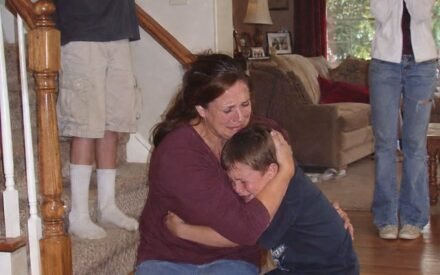
Then she wrapped her arms around my neck and cried. She didn’t make a single sound. Her whole body shook against my uniform, and she didn’t make a sound.
I have been trained to keep my voice level when things go wrong. I’ve sat in rooms where people were deciding whether other people would live through the night. I have never in my life had to work so hard to keep breathing.
My name is Major Hannah Nolan. I’m an Army intelligence officer. Twenty minutes earlier I had been sitting in the back of a rideshare on Battlefield Boulevard in Chesapeake, Virginia, grinning like an idiot.
I’d been gone six months. My unit’s rotation got moved up, and I’d landed three weeks ahead of schedule. I could have called. I didn’t.
I wanted to see Derek’s face. I wanted to see Lily run down the hall in her socks and slide the last three feet like she always did. I’d stopped at a gas station near the airport and bought a stuffed sea turtle with a little shell that crinkled, because Lily was in a sea turtle phase when I left.
The turtle was still in my jacket pocket. I could feel it pressed between us.
When Lily finally loosened her grip, I made myself look at her. Really look, the way I’d look at a photograph I needed to brief.
Her cheeks were thinner. Not a little thinner. Her face had changed shape. Her collarbones stood out above the neck of a pajama shirt that was too dirty to have been changed in days.
Her hair was matted on one side. There was a ring of dried something around her mouth. Her fingernails were black.
“Sweetheart,” I said, and I made my voice soft. “Where’s Daddy?”
“He went on the big boat.”
“The big boat?”
She nodded. “With Grandma. And Aunt Jenna. And Uncle Rob and the cousins.” She said the names like she was reciting them from a list she’d been given. “It goes in the ocean for a long time.”
My stomach dropped through the floor.
“Who’s been staying with you, Lily?”
She turned her head and pointed toward the hallway. I looked. There was nobody there.
“Nobody,” she said. “Grandma said Mrs. Price would give me crackers.”
Then the smell hit me. I don’t know how I missed it walking in, except that I’d only seen Lily.
It was sour and heavy, the smell of food that had been left out long enough to turn. I stood up with Lily on my hip and looked into the kitchen.
Garbage spilled out of the can by the back door. Pizza boxes were stacked on the counter. Plates with dried sauce covered every flat surface, and a carton of milk sat open by the sink, bloated at the sides.
On the floor by the pantry, there was a box of saltines, torn open and empty. Next to it were three empty juice boxes, the straws chewed flat.
Someone had left a four-year-old with a box of crackers and three juice boxes.
I pulled out my phone and dialed 911 with my thumb. My voice came out exactly the way I’d been trained to make it come out. Calm. Clear. Facts first.
“My name is Major Hannah Nolan. I just returned home from deployment. My four-year-old daughter has been left alone in the house. I believe for several days. She appears malnourished. I need police and an ambulance.”
The dispatcher asked me for the address. I gave it. She asked if my daughter was breathing normally, if she was conscious, if she was responding.
“She’s responding,” I said. “She’s talking.”
Lily was watching my mouth while I spoke. I made myself smile at her.
I still had my field bag over my shoulder. I unzipped it one-handed and found a bottle of water and a pouch of applesauce I’d grabbed from the airport. The dispatcher told me small amounts only, slowly, and not to give her too much at once.
I sat on the couch and held the bottle to Lily’s lips. She grabbed at it with both hands.
“Little sips, baby. Little ones. There’s more. I promise there’s more.”
She took two swallows and looked at me like I might take it away. I gave her two tiny spoonfuls of applesauce off the end of my finger because I didn’t have a spoon. She closed her eyes when she tasted it.
“Lily,” I said quietly. “How long has Daddy been gone?”
She thought about it. Then she held up three fingers. She held them very straight, the way she’d learned in preschool.
Three days.
My daughter had been alone in this house for seventy-two hours.
I sat there holding up her water bottle, and I started counting backward in my head. Three days ago I’d been in a staging tent, writing her a postcard with a camel on it. I’d drawn a smiley face on the camel. I’d been thinking about what she’d look like when she saw me.
She’d been sitting on this floor.
Part 2: The Woman Next Door
The ambulance and the first patrol car pulled up within minutes. I heard the doors and the radios before I saw anyone.
Two paramedics came in first, a heavyset man with a gray beard and a young woman with a braid. The woman knelt in front of the couch and introduced herself to Lily before she introduced herself to me. I loved her for it instantly.
“Hi, sweet pea. I’m Danielle. I like your pajamas. Are those sea turtles?”
Lily nodded against my chest.
“I love sea turtles,” Danielle said. “Can I listen to your heart? It tickles a little.”
Behind her, a tall officer stepped through the doorway and stopped. I watched his face take in the room. He’d seen a lot of houses, I could tell. He still had to stop.
“Ma’am, I’m Officer Marcus Bell. Are you Major Nolan?”
“Yes.”
“Is there anyone else in the house?”
“I don’t know,” I said. “I don’t think so. I haven’t checked upstairs.”
“I’ll check. You stay with her.”
He went through the rooms one at a time. I could hear his boots and his voice saying “Chesapeake police” at each door. Nobody answered.
While Danielle checked Lily’s blood pressure with a cuff that looked enormous on her arm, I opened Derek’s social media on my phone. I don’t know what I expected to find. Some explanation, maybe. Some emergency.
The first picture was from that morning.
Derek was standing on the deck of a cruise ship in a white linen shirt. The water behind him was so blue it looked fake. His arm was around his mother, Patricia, who had on a big straw hat and sunglasses. His sister, Jenna, was laughing at something off camera. Jenna’s husband, Rob, held up a drink with a little umbrella in it.
Their two boys were in the corner of the picture, wearing matching swim shirts.
The caption said: “Family is everything. 🌊☀️”
I looked at it for a long time. Then I looked down at Lily, at the blood pressure cuff, at the matted side of her hair.
Family is everything.
Next, I opened our banking app. My hands weren’t shaking. I want to be honest about that. Something in me had gone very cold and very organized.
Our joint checking account had four hundred and twelve dollars in it.
The savings account, the one we’d started when Lily was born, the one we called the emergency fund, had been emptied two weeks earlier. The transfer note said “trip.”
My deployment pay had landed on the first of the month. It was gone too.
All together, almost nineteen thousand dollars had moved out of our accounts in six weeks. I scrolled through the charges. A cruise line, three times. Shore excursions. A resort day pass in Cozumel. Payments to two credit cards I didn’t recognize.
Not one charge at a grocery store in the last ten days.
Not one.
The front door opened again. A woman in a bathrobe and rain boots came in so fast she nearly ran into the gray-bearded paramedic.
It was Evelyn Price, our neighbor. She was seventy-one, a retired school nurse who grew tomatoes in buckets on her porch and waved at every car on the street. Lily called her Miss Evvie.
“Oh, thank God,” she said when she saw me. She put a hand over her heart. “Hannah. Oh, thank God. I saw the ambulance. Is she—”
“She’s okay,” I said. “She’s talking.”
Evelyn looked at Lily, and her face crumpled. She sat down hard on the arm of the recliner.
“I saw her at the window yesterday,” she said. Her words came out in a rush. “In the afternoon. She was standing on the back of the couch with her hands on the glass. And I thought, where’s Derek? His car was gone. I hadn’t seen it in a couple days.”
Officer Bell had come back downstairs. He stood very still and listened.
“So I went over and rang the bell,” Evelyn said. “Nobody came. And then the doorbell talked to me. That camera thing. A man’s voice.”
“What did he say?” Officer Bell asked.
“He said, ‘Hi, can I help you?’ And I said, ‘This is Evelyn from next door, is Lily all right? I saw her in the window.’ And he said, ‘Oh, she’s fine, the babysitter’s upstairs with her. Thanks for checking.’ Very friendly.”
Officer Bell looked at me. Then he looked back at Evelyn.
“Ma’am,” he said quietly, “there’s no babysitter in this house. There’s nobody in this house.”
Evelyn’s mouth opened. Nothing came out.
“Was it Derek’s voice?” I asked her.
She thought about it. Her eyes filled up.
“I don’t know,” she said. “It sounded like a speaker. It sounded far away.” Then she put her face in her hands. “I believed him. I went home. I went home and made soup and I believed him.”
“Miss Price,” Officer Bell said, “you came. A lot of people wouldn’t have.”
Part 3: The Phone Call
That’s when my phone rang.
The screen said DEREK, with the photo I’d set years ago, the one of him holding Lily the day she was born. Her face was red and furious. His was wet with tears. I had loved that picture so much.
I looked at Officer Bell. He nodded once.
I answered and put it on speaker.
“Hannah?” Derek’s voice. Behind him there was music, steel drums, and people laughing. Somebody yelled “Woo!” close to the phone. “Hey! Babe! Why are you calling from— wait. Wait, the app says you’re at the house. Why are you back so soon?”
The app. He’d been watching the location on my phone. He’d been watching the house.
“Derek,” I said. “Who was supposed to be watching Lily?”
He didn’t say anything. The music kept going. I could hear him breathing.
Then, the way I’d heard him do a hundred times when he was caught, his voice got light and annoyed at the same time.
“Okay, so, the babysitter canceled. Last minute. It was a whole thing. Mom said Evelyn would keep an eye on the house. Evelyn’s right there, she’s always home.”
Across the room, Evelyn lifted her head out of her hands. She stared at the phone like it had slapped her.
“Nobody asked me,” she said, loud enough for him to hear. “Nobody asked me anything.”
Derek went quiet for a second. Then he kept going like she hadn’t spoken.
“Look, I checked the cameras like every hour. She was fine. She was watching her shows.”
“You left our four-year-old alone for three days,” I said.
“Stop yelling.”
“I’m not yelling, Derek.”
I wasn’t. That was the strange part. My voice was so even it frightened me.
“We’ll be home Sunday,” he said. “We dock Sunday morning. It’s literally two more days. Just— feed her, okay? I’ll explain everything.”
“The police are standing in our living room,” I said.
The music behind him didn’t stop, but he must have walked away from it, because suddenly it got smaller and smaller until it was just wind. I could hear the ocean through the phone. I could hear his breath going ragged.
“What did you do?” he said.
“I came home, Derek.”
There was a long silence. When he talked again, his voice was different. It wasn’t annoyed anymore. It was low and fast.
“Hannah. Hannah, listen to me. Don’t let those officers search the house.”
Officer Bell slowly turned his head and looked at me.
“Why wouldn’t I let them?” I said. “This is my home.”
“Just— don’t. You don’t have to. You can tell them no. It’s your right. Tell them to get a warrant.”
“Derek, why would I want them to get a warrant?”
“Stay away from the linen closet in the hallway.”
Every head in the room turned at the same time. Mine. Officer Bell’s. Evelyn’s. Even Danielle, the paramedic, looked up from Lily’s arm.
The linen closet was at the end of the downstairs hallway, next to the half bath. It had two narrow louvered doors. When I left, it held towels, sheets, a first-aid kit, and the vacuum.
Now there was a thick brass padlock hooked through the two door handles.
It was the heavy kind with the hardened shackle, the kind people put on storage units. It looked ridiculous on those flimsy little doors. It looked like someone had locked a cardboard box with a bank vault.
I had never seen it before in my life.
Officer Bell walked over and stood in front of it. He didn’t touch it. He just looked.
Derek must have heard his footsteps, or heard the silence, because suddenly he was screaming. Not talking. Screaming, so loud the phone speaker crackled.
“IF YOU BREAK THAT LOCK, YOU’LL DESTROY EVERYTHING!”
Lily flinched against my chest. I put my hand over her ear and held her head against me.
Nobody said anything. The refrigerator hummed. Outside, the ambulance radio chattered.
Until that moment, my brain had been working on the problem I could see. The money. The cruise. The fact that my husband had looked at our daughter and decided a box of crackers and a doorbell camera were enough.
That was already the worst thing I could imagine.
But Derek wasn’t crying about Lily. He hadn’t asked if she was okay. Not once. Not when I said police, not when I said three days.
He was terrified of a closet.
I’ve spent my career learning to notice what people protect. What a person guards tells you what they value. Derek had left our child unguarded and put a brass padlock on a towel closet.
Officer Bell turned around.
“Major Nolan, was this closet locked before you deployed?”
“No, Officer.”
“Did you authorize your husband to secure anything inside it? Anything at all?”
“Never.”
He nodded. He looked at the lock again, then at the phone in my hand.
Part 4: Cut It
Danielle stood up and said they needed to take Lily to the children’s hospital in Norfolk. Her heart rate was fast and she was dehydrated, and they wanted bloodwork and fluids. She said it gently, but she said it twice, so I knew it mattered.
“I’m coming with her,” I said.
“Of course you are.”
The gray-bearded paramedic, whose name was Tom, brought in a little stretcher. Lily wouldn’t let go of me until I promised I’d walk right beside it the whole time. Danielle let her hold my finger while they buckled the straps.
They were turning the stretcher toward the front door when Lily lifted her head. She looked down the hallway, straight at the closet.
“Daddy told me not to open that door,” she said.
Officer Bell crouched down beside the stretcher, so his face was level with hers. He was a big man, and he made himself small.
“He did? Did he tell you why, sweetheart?”
Lily shook her head. Then she said, in the matter-of-fact voice four-year-olds use for the strangest things:
“He said Mommy would be mad if I saw his papers.”
His papers.
Officer Bell looked up at me. I looked at the padlock.
On the phone, Derek was still talking. It wasn’t screaming anymore. It was begging, mixed with anger, mixed with something I didn’t have a word for.
“Hannah, stop him. You don’t understand what you’re doing. You don’t understand. If they take that stuff, it’s over. It’s all over. Do you hear me? It’s over for both of us.”
For both of us.
I thought about that phrase later, many times. At that moment it just slid past me, because I was looking at my daughter’s thin wrists on the stretcher.
Nineteen thousand dollars gone. A babysitter who didn’t exist. A voice through a doorbell, lying to a seventy-one-year-old woman in rain boots. My child alone in this house, standing on the back of the couch with her hands on the glass.
And now he wanted me to protect his papers.
Officer Bell went out to his car. When he came back, he was carrying a pair of long-handled bolt cutters.
“Major,” he said, “this is your residence and you’re consenting to the search. I want to be clear. Do you consent?”
“I consent.”
He set the jaws of the cutters around the shackle. The metal scraped against the brass with a sound like a fingernail on a chalkboard.
Through the phone, Derek heard it.
“No,” he whispered. All the yelling was gone out of him. “Please, Hannah. Please. I’m begging you.”
In nine years of marriage, I had never heard my husband sound afraid. Not when his father died. Not when Lily was born three weeks early and the nurses rushed her to the NICU. Not ever.
He was afraid now.
I held the phone up so he could hear every single thing. Then I looked at Officer Bell.
“Cut it.”
He brought the handles together. There was a hard metallic snap, loud as a gunshot in that hallway. The padlock dropped onto the hardwood and bounced once.
On the phone, Derek made a noise like he’d been punched.
Then the line went dead.
Officer Bell pulled the doors open.
The towels were gone. The sheets were gone. The vacuum was gone.
Inside, stacked from floor to the second shelf, were banker’s boxes. Six of them. On the top shelf sat a gray metal fireproof lockbox, a laptop, and a stack of mail tied with a rubber band.
Taped to the inside of the left door was a sheet of printer paper. It had two columns, written in Derek’s handwriting. The left column was headed “HANNAH.” The right column said “STATUS.”
The first line in the left column said: “Signature — practiced (see folder 2).”
The status next to it said: “Good.”
Part 5: What Was Inside
I didn’t go through the boxes that night. I want to say that clearly, because later Derek’s lawyer tried to claim I’d planted things. Officer Bell called for a detective and a supervisor before anyone touched anything. They photographed everything where it sat.
I rode in the back of the ambulance with Lily. She held my finger the whole way to Norfolk.
At the children’s hospital, they started an IV in her hand. She didn’t cry. That scared me more than if she had screamed. She just watched the needle go in with big, flat eyes, like it was happening to someone else.
“You’re so brave,” the nurse told her.
“I’m used to it,” Lily said.
I don’t know what she meant. I don’t think she knew either. But I went into the bathroom of that hospital room and put my forehead against the cold paper towel dispenser and stayed there until my legs stopped shaking.
Around two in the morning, my father arrived.
Gene Albright was sixty-eight, a retired welder from the Norfolk shipyard, and he’d driven over in his work boots and a flannel shirt buttoned wrong. I’d called him from the ambulance. I’d said four words: “Dad. It’s Lily. Come.”
He didn’t ask a single question on the phone. He just came.
He stood in the doorway of the room and looked at Lily asleep under the blanket, with the tube taped to her hand. His big face went red and then white.
“I’m going to kill him,” he said quietly.
“No, you’re not, Dad.”
“No,” he agreed, after a second. “I’m not. But I’m going to sit here and think about it.”
He pulled the vinyl chair up next to the bed and put one enormous finger in Lily’s open palm. She closed her hand around it in her sleep.
He stayed in that chair for two days.
The detective came the next morning. Her name was Renée Okafor, and she was with the Chesapeake police special victims unit. She had reading glasses pushed up into her short gray hair and a voice like a kindergarten teacher who’d seen everything.
She talked to me in the family lounge down the hall, with a cup of terrible coffee between us.
“Major Nolan, I’m going to tell you what we found. Some of it’s going to be hard to hear. You can stop me any time.”
“Don’t stop,” I said. “Just tell me.”
She opened a notebook.
“In the closet, we recovered what appears to be a Special Power of Attorney, notarized, granting your husband authority over your financial affairs and the property at your address. It’s dated four days after you deployed.”
“I didn’t sign a power of attorney,” I said. “I signed a limited one for Lily. Medical decisions only. That’s it.”
“We have that one too. It was in the box.” She looked at me over her glasses. “It looks like it was used as a template. The language at the top matches. The signature on the new one is very, very close to yours.”
Signature — practiced. Status: good.
“What did he use it for?” I asked.
Detective Okafor turned a page.
“Using that power of attorney, he refinanced your house. A cash-out refinance, closed in your second month overseas. About eighty-six thousand dollars in equity, deposited into an account in his name only.”
I had to put my coffee down.
“He also opened four credit cards in your name, using your Social Security number and your military pay statements as proof of income. Those cards are carrying a little over forty thousand in balances. Some of that went to the cruise. Some of it went to what looks like online gambling. Sports betting, mostly. A lot of it.”
Derek had always liked to bet on football. Twenty dollars here and there with his friends. I used to tease him about it.
“How much did he lose?” I asked.
“We’re still adding it up. More than he took from the house.”
She told me the rest slowly, and I made her tell me all of it.
There was a stack of my mail. Letters from the bank about the refinance, addressed to me. Fraud alerts from the credit bureaus. A notice from the IRS. Every single one had been opened, read, and hidden in that closet.
There was a folder labeled “LILY – SCHOOL.” Inside were three letters from her preschool. The first one, from two months ago, said Lily had been arriving without lunch. The second said she’d fallen asleep at her table several days in a row and asked if everything was okay at home. The third said she’d been withdrawn from the program for nonpayment.
He’d taken her out of preschool. He’d taken away the only other adults who saw her every day.
“There’s one more thing,” Detective Okafor said. “And I think it’s the thing he was most afraid of us finding.”
She slid a photocopy across the table.
It was the first page of a petition for divorce and sole custody. Derek’s name was at the top as petitioner. Mine was below it. It hadn’t been filed yet.
Clipped to it was a notebook. Pages and pages in his handwriting. Dates and entries. “Hannah screamed at Lily on FaceTime, called her stupid.” “Hannah threatened to hurt herself if I left.” “Hannah admitted she drinks alone on deployment.”
None of it was true. Not one word. Most of the dates were days I could prove I’d been in a room with no phone.
“He was building a case,” I said.
“Yes,” Detective Okafor said. “It looks like the plan was to drain your money, file for divorce when you got back, and take custody by painting you as unstable. If you’d come home on schedule, the house would’ve been cleaned up. Lily would’ve been fed for a few weeks. You’d have walked into a nice homecoming and then been served papers.”
“And the debt?”
“In your name,” she said. “All of it.”
I sat there in the family lounge with the vending machine humming behind me, and I understood what he’d meant on the phone.
It’s over for both of us.
He meant his plan. He meant his life. He’d been building it for six months in a towel closet while our daughter got thinner.
Part 6: The Notary Stamp
The thing about being an intelligence officer is that you don’t trust a story until you’ve seen every piece of it fit. Detective Okafor had given me the story. I wanted the pieces.
On the third day, they discharged Lily into my care with a list of instructions. Small meals. Lots of fluids. Follow up with her pediatrician. A social worker would visit the house.
I brought her home to my father’s house in Norfolk, not ours. I couldn’t take her back there yet.
My dad’s place was a little brick ranch near the water with a chain-link fence and a lawn he mowed in perfect stripes. My mom had died four years earlier, and he’d kept everything exactly the way she’d left it. Lily slept in my old bedroom, under a quilt my mother had made.
That first night, Lily woke up at three in the morning and walked into the kitchen, where I was sitting at the table. She opened the pantry and stood in front of it, staring at the shelves.
“What are you looking for, baby?”
“I’m counting,” she said.
“Counting what?”
“The crackers. So I know how many days.”
I got down on the floor next to her. I took every box of crackers out of my father’s pantry and lined them up on the linoleum. Then I took out the cereal, the peanut butter, the canned peaches, the bread.
“Look,” I said. “All of it. All of it is for you. And when it runs out, Grandpa goes to the store and gets more. And when Grandpa can’t, I go. It never runs out. Not ever again.”
She looked at the food lined up on the floor. Then she looked at me and touched my cheeks with both hands, the way she had that first day.
“You’re real,” she said.
“I’m real.”
She fell asleep on the kitchen floor with her head in my lap, surrounded by crackers. My dad found us there at six when he came in to make coffee. He didn’t say a word. He just put a blanket over both of us.
The next afternoon, while Lily napped, I asked Detective Okafor if I could see copies of the documents. Not the originals. Copies. She hesitated, then said she’d allow it if I sat in the station and didn’t take anything home.
I sat in a gray room at the Chesapeake police headquarters with six folders and a highlighter. I worked the way I’d worked for twelve years, looking for patterns, gaps, and things that didn’t belong.
The forged power of attorney was notarized. That bothered me immediately. A notary is supposed to watch you sign. They’re supposed to check your ID. I’d been eight thousand miles away.
So who had stamped it?
The notary block said: “Patricia A. Nolan, Notary Public, Commonwealth of Virginia.” There was a commission number and a round embossed seal.
Patricia. My mother-in-law.
Patricia had worked at a credit union in Portsmouth for twenty-two years. She’d been a notary there for most of it. She used to joke at Christmas that she’d notarized half the mortgages in Hampton Roads.
I sat back in the plastic chair.
I thought about every holiday at her house. The way she called me “the soldier” instead of my name. “Is the soldier coming to Thanksgiving?” The way she told Lily, when she was two, that Mommy left because Mommy’s job was more important.
I thought about what Lily had said in the living room. Grandma said Mrs. Price would give me crackers.
Grandma knew.
Patricia had known Lily was staying home alone. She had stood in my house, or called my daughter, and told a four-year-old that a neighbor would feed her. Then she’d gotten on the ship.
I put the highlighter down. I asked for Detective Okafor.
When she came in, I turned the page toward her and put my finger on the seal.
“That’s his mother,” I said.
She looked at it for a long time. Then she sat down across from me.
“I know,” she said. “I was hoping you’d find it yourself. I wanted to know if you’d see it.”
“Why?”
“Because his defense is going to be that you knew about all of this. That you signed it, and you’re lying now to get custody.” She tapped the seal. “Patricia’s notary log has to show your signature, your ID, the date. If her log has an entry for you on that date, she lied in an official record. If it doesn’t have an entry, she stamped something she didn’t witness. Either way, it’s a crime. And either way, it proves you weren’t there.”
“Can you get her log?”
“We’re getting a warrant this afternoon.”
That night I called my JAG attorney at Fort Eustis, Captain Lorna Whitfield. She was younger than me and talked like an auctioneer when she got excited.
I told her everything. She was quiet for about five seconds, which for Lorna was a very long time.
“Hannah,” she said finally. “Do you understand that what they did is a federal problem too? You were a deployed servicemember. There are laws about exactly this. About people taking advantage of soldiers while they’re overseas.”
“I just want my daughter safe,” I said.
“Your daughter is going to be safe. I promise you that. But I want you to understand something.” Her voice slowed down. “None of this debt is yours. The house refinance can be undone. The credit cards can be disputed. Everything he did with that fake paper is built on a lie, and when the lie falls, all of it falls. You hear me?”
“I hear you.”
“Good. Now go hug that kid.”
Part 7: Sunday Morning
The cruise ship docked at the Port of Baltimore at 7:10 on Sunday morning.
I wasn’t there. Detective Okafor had asked me not to be, and I’d agreed. Lily needed me more than I needed to see Derek’s face.
But I’ll tell you what I know, because I’ve read every report and watched every minute of the video.
Derek had tried to get off the ship early. He’d called the cruise line on Friday, after I hung up on him, and asked about leaving in Nassau and flying home. They told him it would cost two thousand dollars to change his ticket.
He didn’t have two thousand dollars. Every card he’d opened was maxed out or frozen. I’d called the banks the day after the closet, with Lorna on the line.
So he stayed on the ship. For two more days, he sat on that boat, knowing.
Two Chesapeake detectives and two officers from Baltimore met the ship at the bottom of the gangway. They let the other passengers go first.
When Derek came down, he was wearing a baseball cap pulled low and sunglasses, even though the sky was gray. Patricia was right behind him in her straw hat, pulling a rolling suitcase covered in luggage tags.
Detective Okafor stepped forward and said his name.
The bodycam caught everything. Derek stopped walking. For a second he just stood there. Then he did something I didn’t expect.
He laughed. A short, awful laugh.
“She actually did it,” he said. “I can’t believe she actually did it.”
He didn’t ask about Lily. Even then. Not once.
Patricia was another story.
She started talking before anyone said a word to her. She said it was a misunderstanding. She said Evelyn Price had promised to check on the child. She said Hannah was always away and somebody had to make decisions for that family.
“I have been a notary for nineteen years,” she said, when Detective Okafor mentioned the power of attorney. “I would never. I would never stamp something improper. Hannah signed that paper. She signed it right in front of me.”
“Mrs. Nolan,” Detective Okafor said, “on the date of that signature, Major Nolan was in a secure facility overseas. We have her duty logs. We have her commanding officer’s statement. And we have your notary log.”
Patricia’s face changed.
“Your log doesn’t have an entry for that date,” the detective went on. “Not for Hannah. Not for anyone. You stamped a document you never witnessed and never recorded.”
Patricia opened her mouth. Then she closed it. Then she sat down on her rolling suitcase, right there on the concrete, and started to cry.
“He’s my son,” she said. “He was in trouble. He’s my son.”
“Ma’am,” Detective Okafor said, “his daughter is your granddaughter.”
Jenna was the one I didn’t know what to expect from.
Derek’s sister had always been the quiet one in that family. She was thirty-four, a dental hygienist, married to Rob, who sold insurance. At holidays she’d help me clear the table while everyone else watched football. She’d never said much to me, but she’d never been cruel.
When the detectives told her what had happened, she didn’t defend anyone. She dropped her purse.
“What do you mean, alone?” she said. “Derek said Lily was staying with Patricia’s friend from church. Miss Darlene. He showed me a text from her.”
Detective Okafor asked to see the text. Jenna pulled it up with shaking hands.
The message said, “Lily is having so much fun! We made cookies! Enjoy your trip! – Darlene.” It had come from a number that, it turned out later, belonged to a prepaid phone. The prepaid phone was in the lockbox in my linen closet.
Derek had texted his own sister, pretending to be a babysitter who didn’t exist.
Jenna turned around and looked at her brother. He was standing in handcuffs by the police car.
“You told me she was making cookies,” she said. Her voice cracked in half. “You showed me cookies, Derek.”
He looked away.
Jenna called me that night. I almost didn’t answer.
“Hannah,” she said. She was sobbing so hard I could barely understand her. “I didn’t know. I swear to God I didn’t know. I would have come. I would’ve jumped off that boat and swum home. I asked him every day. I asked him how she was. He sent me pictures.”
“What pictures?”
“Old ones,” she said. “I realize that now. Old pictures of her. I didn’t look close. I was drinking piña coladas and he was showing me old pictures and I didn’t look close.”
I stood in my father’s backyard in the dark, listening to her cry. I wanted to be angry at her. I wanted somebody besides Derek and Patricia to be angry at.
“Jenna,” I said. “Will you tell the police everything? Every text, every picture, everything he said?”
“Everything,” she said. “Everything. Whatever you need.”
“Then that’s what I need.”
Part 8: Miss Evvie
Lily got better slowly, the way kids do. Not in a straight line. In bumps.
Her cheeks came back first. Then her energy. By the second week at my father’s house, she was running up and down his hallway in her socks, sliding the last three feet into the kitchen. The first time she did it, my dad had to go out to the garage for a few minutes.
But some things didn’t come back right away.
She hid food. I’d find crackers in her pillowcase, a granola bar in her rain boot, half a banana going brown under her bed. Her pediatrician told me not to punish it and not to make a big deal out of it. She said it would stop when Lily’s body finally believed the food wasn’t going away.
So I bought her a little basket. A wicker one with a lid. I put it next to her bed and filled it with crackers, raisins, and juice boxes.
“This is yours,” I told her. “Nobody touches it but you. You can eat it any time. Middle of the night, morning, whenever. And when it’s empty, you tell me, and I’ll fill it back up.”
She checked that basket every night before bed for three months. Every night, it was full.
Then one night she forgot to check. I stood in her doorway and watched her fall asleep without looking, and I had to sit down on the hallway carpet.
She also wouldn’t go near closets. Not mine, not my father’s, not the one in her room. If the door was closed, she’d walk around it like it was a hole in the floor.
A child therapist named Dr. Imani Brooks started seeing her twice a week. Dr. Brooks had a playroom full of puppets and a dollhouse with little furniture. In the fourth session, Lily took the father doll out of the dollhouse and put him inside the tiny toy closet. Then she closed the door.
“What’s he doing in there?” Dr. Brooks asked.
“Papers,” Lily said. “He’s always doing papers. He doesn’t hear you.”
“What happens if you knock?”
“He says go watch your show.”
Dr. Brooks told me about it afterward, in her office. She said Derek had probably been spending hours in that hallway, hunched over the laptop in the closet, while Lily sat in the living room.
“She learned that closets are where grown-ups go to stop seeing her,” she said. “We’re going to help her unlearn it. But it’s going to take time.”
I went to see Evelyn Price on a Tuesday, about three weeks after everything.
I hadn’t been back to the house except once, with Detective Okafor, to grab clothes. I parked in my own driveway and walked straight past my front door to Evelyn’s porch, with her tomato buckets and wind chimes.
She opened the door before I knocked. She’d been watching.
“Hannah,” she said. “Come in. I’ll put on coffee.”
We sat in her kitchen, which smelled like cinnamon and old books. She had a photograph of Lily on her refrigerator, a picture I’d never seen. Lily at maybe three, standing in Evelyn’s yard, holding up a tomato bigger than her fist.
“I’ve been wanting to tell you,” Evelyn said. She held her coffee mug in both hands and didn’t drink it. “I’m so sorry. I should’ve done more. I should have called the police that day. I should have broken a window.”
“Miss Evvie.”
“I spent thirty-one years as a school nurse,” she said. “Thirty-one years. I know what a hungry child looks like. I saw her at that window and I knew. And then a voice in a doorbell told me what I wanted to hear, and I went home.”
I put my hand over hers.
“You know what Lily said to me?” I asked. “The first night at my dad’s?”
Evelyn shook her head.
“She said, ‘Miss Evvie came to the door.’ She heard you. She was upstairs hiding because Derek told her not to open the door for anybody. She heard you ring the bell and say her name.”
Evelyn’s chin started to shake.
“She said, ‘Somebody was looking for me.’ That’s what she held on to, Evelyn. For a whole day, before I got there. She knew somebody was looking for her.”
Evelyn put her mug down. She covered her face with her hands, and her shoulders shook.
“And when I got there,” I said, “you came running across the street in your bathrobe. You came anyway. You’d been worried for a whole day. You didn’t let it go.”
We sat there for a long time. Then Evelyn wiped her face with a dish towel, stood up, and went to the counter.
“I made her something,” she said. “I’ve been waiting to give it to you.”
It was a tin. A big round Christmas cookie tin with a picture of a lighthouse on top. Inside were homemade crackers, the thin, crispy kind with sea salt, wrapped in wax paper.
“She can eat as many as she wants,” Evelyn said. “And when the tin’s empty, she can bring it back. I’ll fill it up. Every time. As long as I’m alive.”
Part 9: The Hearing
Derek’s lawyer tried everything.
At the custody hearing in the Chesapeake Juvenile and Domestic Relations court, he stood up in a nice suit and said Derek was a loving father who’d made a terrible error in judgment under financial stress. He said Hannah had abandoned the family for long periods. He said Derek was overwhelmed, alone, and that the military had put an impossible burden on him.
Then he held up the notebook. The one with all the made-up entries about me.
“These are contemporaneous notes,” he said. “My client documented concerning behavior by Major Nolan over many months.”
Lorna Whitfield was sitting next to me. She’d driven down from Fort Eustis in her dress uniform. When the judge asked if we had a response, she stood up with a single sheet of paper.
“Your Honor,” she said, “I’d like to introduce Major Nolan’s classified duty log, in its unclassified summary form, signed by her commanding officer.”
She handed it to the clerk.
“On fourteen of the twenty-two dates in that notebook, Major Nolan was in a sensitive compartmented facility. Phones are physically prohibited inside. There is no FaceTime. There is no call. There is no possible way she said any of the things in that book on those days.”
The judge looked at the paper. Then she looked at Derek’s lawyer.
“Counselor, do you want to keep relying on that notebook?”
He sat down.
The judge was a woman in her sixties named Harriet Calloway. She had a reputation for being patient and very hard to fool. She listened to everything.
She listened to Officer Bell describe the house. She listened to Danielle the paramedic describe Lily’s weight and heart rate. She listened to Evelyn Price talk about the voice in the doorbell, and she listened to Jenna, who testified with her husband sitting in the front row holding a box of tissues.
Then she listened to the recording.
It was from our doorbell camera’s cloud account, which Detective Okafor had subpoenaed. The camera had two-way audio. Every time someone spoke through it, the system saved a clip.
The clip with Evelyn was there. “Oh, she’s fine, the babysitter’s upstairs with her.” Derek’s voice. Clear as day once you knew.
But there were other clips. The system had saved every time someone in the house talked into the indoor camera, too. The one in the living room.
There was one from the second night. Lily’s little voice.
“Daddy? Daddy, are you there? I’m hungry. The crackers are all gone. Daddy?”
And then, after a long pause, a click. And Derek’s voice, from the ship, through the speaker, with music behind it.
“Go to bed, Lily. Daddy’s busy. Go to bed and it’ll be morning faster.”
Nobody in that courtroom moved.
Judge Calloway took off her glasses. She set them on the bench in front of her and folded her hands.
“Mr. Nolan,” she said. “Did you hear your daughter tell you she was hungry?”
Derek’s lawyer started to stand up. The judge raised one hand without looking at him.
“I’m asking him.”
Derek was sitting at the table in a suit that didn’t fit right anymore. He’d lost weight in jail, before Patricia scraped together his bail. He stared down at the table.
“I thought she had more food,” he said finally. “I thought there were more crackers.”
“You had a camera in the kitchen, Mr. Nolan. It’s in the evidence. You could see the pantry.”
He didn’t answer.
“I’ll tell you what I think,” Judge Calloway said. “I think you looked. And I think you decided it was a problem you’d deal with on Sunday.”
She put her glasses back on.
The ruling took ten minutes.
Sole legal and physical custody to me. A protective order barring Derek from any contact with Lily, to be reviewed only after he completed a parenting program, treatment for gambling, and whatever the criminal court decided. No contact with Patricia either, unless I chose it, in writing, with a therapist present.
Outside the courtroom, in the hallway, Patricia was waiting.
She’d gotten old in two months. Her hair was gray at the roots, and she wasn’t wearing makeup. Her lawyer had warned her not to approach me, and she did anyway.
“Hannah,” she said. “Please. I just want to see her. I just want to see my granddaughter.”
I stopped walking. Lorna put a hand on my arm.
“You saw her,” I said. “You saw her before you left. You told her Mrs. Price would give her crackers. You were the last grown-up who saw my daughter before she was alone for three days.”
Patricia’s mouth trembled.
“I thought he had it handled,” she whispered.
“He had a padlock,” I said. “That’s what he had handled.”
I walked away. She called my name twice. I didn’t turn around.
Part 10: The Rest of It
The criminal case took almost a year.
Derek pleaded guilty in the end. Child neglect, identity theft, forgery, and fraud. Lorna had been right about the federal piece too. Because the money had been taken from a deployed servicemember using forged documents, the U.S. Attorney’s office got involved in the financial charges.
His lawyer got him a deal. Four years, with credit for the time he’d already served, and a lifetime of restitution payments he will probably never finish.
Patricia lost her notary commission and her job at the credit union. She pleaded to a lesser charge for falsifying the notarization and got probation and community service. The last I heard, she was working at a craft store in Suffolk.
She sends a birthday card to Lily every year. I keep them in a folder. I haven’t decided yet what to do with them. Dr. Brooks says I don’t have to decide. She says someday Lily will be old enough to choose.
The house was harder than the court case.
Lorna and a civilian attorney from the legal aid office fought the bank for five months. In the end, the refinance was unwound. The forged power of attorney was declared void, and everything signed under it fell apart like a building with no foundation.
The credit card companies wrote off what Derek had charged in my name, one by one. The last letter came on a Thursday in March. I opened it at my father’s kitchen table and read it twice, then put it on the refrigerator under a magnet shaped like a crab.
“What’s that?” Lily asked.
“That,” I said, “is a piece of paper that says Mommy doesn’t owe anybody anything.”
She studied it seriously. “Is it a good paper or a bad paper?”
“It’s the best paper.”
I almost left the Army.
I want to be honest about that, too. For a few months, I thought it was my fault. I’d gone away. I’d trusted the wrong man with the most important thing I had. If I’d been home, none of it would have happened.
My father sat me down one night on his back porch, with the shipyard lights blinking across the water.
“You know what I did for thirty-nine years?” he said. “I welded ships. Big gray ships. And every time one of them went out, I knew some kid was going to be on it, eight thousand miles from his mother.”
“Dad.”
“Let me finish. Those kids’ families trusted the people at home to take care of things. That’s how it works. You go, and somebody holds the line here.” He looked at me. “Derek didn’t hold the line. That’s on him. You held every line they ever gave you.”
I didn’t leave. But I asked for a stateside assignment, and the Army gave me one. I’m at Fort Eustis now, teaching young intelligence officers how to read people. How to notice what someone protects. How to ask the question nobody else wants to ask.
I tell them a story about a padlock on a towel closet. I don’t tell them whose closet it was.
We moved back into the house a year after that day.
I thought about selling it. Everyone told me I should. But Lily asked me one night, out of nowhere, if we could go home, and I realized she meant that house. The one with her sea turtle wallpaper and the hallway long enough to slide down in socks.
“Are you sure, baby?”
“Miss Evvie lives there,” she said, like it was obvious.
So we went home.
Before we moved back in, my father and I spent three weekends working on it. We tore out the carpet in the living room. We painted every wall. We replaced the doorbell camera with one that only I control, and I gave Evelyn access to the outside view so she could check on us whenever she wanted.
Then we stood in front of the linen closet.
My dad had his drill. He looked at me.
“Doors off?” he asked.
“Doors off.”
He took both louvered doors off their hinges and carried them out to the curb. Where they’d been, there was just an open space now, three shelves and a little floor.
Lily decided what to do with it.
She was five by then, almost six. She stood in front of the empty closet with her hands on her hips, the way she’d seen my dad stand when he was thinking about a job.
“It should be a reading spot,” she announced. “With pillows. And a light. And no door, so everyone can see you.”
So that’s what we made.
My father built a little bench into the bottom shelf and padded it with foam. Evelyn sewed a cushion with sea turtles on it. Jenna, who calls every Sunday now and visits once a month with her boys, brought a string of tiny fairy lights and helped Lily tape them around the edges.
On the top shelf, where the lockbox used to be, Lily keeps her books. On the middle shelf, she keeps Evelyn’s lighthouse tin, always full of crackers.
And taped to the inside wall, right where Derek’s list used to hang, there’s a sheet of construction paper in purple crayon. Lily wrote it herself, with only one letter backward.
It says: “NO LOKS IN OUR HOUSE.”
Last week, I came home late from a training exercise. It was almost nine o’clock, and my dad had been watching her.
I walked in the front door and set my bag down by the stairs. The house smelled like the grilled cheese my father makes, with too much butter.
“Mommy’s home!” Lily yelled from down the hall.
She came running in her socks and slid the last three feet into my legs. I caught her and picked her up. She’s getting heavy now. Her cheeks are round and pink and she has a gap where her front tooth used to be.
She reached up and put both hands on my face. She pressed my cheeks gently, the way you test whether a pie is done.
She still does it. I don’t think she’ll ever stop. I don’t want her to.
“You’re really home,” she said.
But it wasn’t a question anymore. It was just a thing she was saying. A thing that was true.
“I’m really home,” I said.
“Good,” she said. “Come read with me. I saved you a spot.”
She took my hand and pulled me down the hallway, past the place where the padlock used to be, into the little nook with the fairy lights and the sea turtle cushion and the tin full of crackers.
There was no door. Anyone who walked by could see us.
That was the whole point.