She handed it to me in the eye clinic parking lot.
I still had on those dark roll-up glasses they give you after the drops. Everything looked bright and swimmy, like the world was underwater.
“Here, Mama, so you can plan for it,” my daughter Jillian said.
It was a sheet off a yellow legal pad, folded twice. I held it about two inches from my nose. Seventeen trips to the retina doctor. $20 a trip. At the bottom, underlined: $340.
“Gas isn’t free, Mama. I’ll take it in twenties.”
I just sat there with that paper in my lap. “Honey, you never said you wanted gas money.”
“I shouldn’t have to say it,” she said, and started the car.
Twenty-Six Years of Free Rides
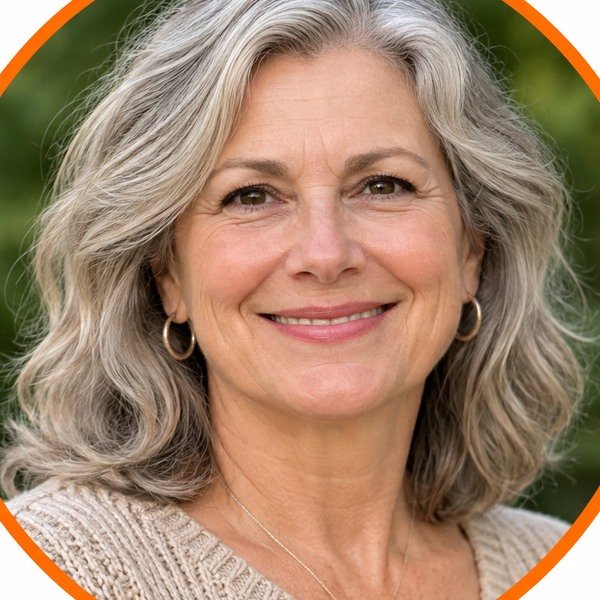
My name is Edith. I drove a school bus in Ottumwa, Iowa, for twenty-six years. I never once charged a child for the ride home.
Two years ago, the doctor told me my eyes were going. The wet kind of macular degeneration, right in the middle, where you need to see faces. “No more driving, Edith,” he said. “Not even to church.”
I gave my keys to the Lord and my son-in-law, in that order.
I can still bake. I can still sew if the light is good. My pill organizer sits by the toaster with a big magnifier beside it. I just can’t get myself across town.
So once a month, Jillian drives me for the shot in my eye. She sighs at every red light. She sighs in the waiting room, scrolling on her phone. I always figured the sighing was free.
Seventeen Trips
That night I read her bill again under the kitchen lamp. Seventeen trips. Two of them were the same day, because she forgot me at the clinic and had to turn around. I sat on that bench for an hour and a half.
I called my grandson. Mitchell’s twenty, studying to be a lineman at the community college. He drives me to the grocery store every Saturday morning in his little pickup, carries the dog food in, and has never asked me for one dollar.
“Did your mama tell you about this bill?”
“Grandma, what bill?”
“Never mind, sweetheart. Grandma’s handling it.”
What Jillian Forgot
Three years ago, after her divorce, Jillian’s credit was ruined. No dealer in Wapello County would give her a car loan. She sat at this same table, mascara running. “Mama, I can’t get to work without a car.”
So I bought her the gray SUV. The loan was in my name. The title was in my name. I paid $412 a month out of my pension, and she paid the insurance. We never talked about it again. A mother does what she does.
Then on Thursday, two envelopes came in the mail.
The first was from Jillian. Her bill again, with “REMINDER” written across the top.
The second was from the credit union. I’d made the last payment on that SUV in October. Inside was the title. Clean. Paid off. My name on it.
I laughed right out loud in my kitchen. My little dog barked at me like I’d lost my mind.
A nasty little part of me wanted to call her and yell. I didn’t. I prayed on it. Then I called Mitchell back. “Sweetheart, does your truck still make that grinding noise?”
“Grandma, it sounds like a coffee can full of rocks.”
“Keep Sunday open. Come hungry.”
Sunday Dinner
I made pot roast with carrots and the good gravy. Jillian came in with her husband, Robert, and set her purse on my counter.
“Did you get the reminder, Mama?” She hadn’t even taken off her coat.
“I did. It’s right by your plate.”
Three hundred forty dollars in a white envelope. Twenties, counted twice, because my eyes aren’t what they were. She counted them a third time right there at the table. Robert stared at his plate. Mitchell looked at me like he couldn’t believe it.
“See, that wasn’t so hard,” Jillian said, and tucked it in her purse.
I passed the rolls. I let her tell me about a sale at the outlet mall. I wanted to be fair. I wanted to give her one more chance. So I asked, sweet as pie:
“Honey, would you still drive me if I couldn’t pay?”
She laughed. “Mama, everybody pays for something these days.”
Robert said, real quiet, “Jill.” She waved him off.
That was the moment I stopped feeling sorry about what I was going to do.
After pie, I took the big brown envelope off the top of the refrigerator and set it in front of her. “One more thing, honey.”
“What’s this, Mama, a tip?” she laughed.
Mitchell put down his fork. Jillian slid out the paper. The make of her car. The color. The VIN off the dash. And my name, plain as day, as the owner.
Her smile went crooked.
“My Car”
“I know whose name is on it, Mama,” Jillian said, shoving the title back into the envelope. “I’ve been driving my car for three years.”
“I bought it so you could get to work,” I said. “I never said it was a gift. And I just made the last payment in October. All thirty-six of them.”
She stood up, grabbed her coat, and pointed at me from the doorway. “You’re going to regret this.”
Robert mumbled “Thank you for dinner, Edith” and followed her out.
2:17 a.m.
My phone rang in the middle of the night. Jillian, panicking. Robert was saying they might have to refinance their house if she didn’t have a car. Couldn’t I just sign the title over to her? Tonight?
“No, honey,” I said. “Not tonight. Go to sleep.”
What Mitchell Heard
Two days later, Mitchell came by with groceries and a worried look. Jillian had been calling relatives. She was telling them I’d promised her the car, and that I was just “confused about the title because of my eyes.”
My eyes are bad. My mind is not.
The Credit Union
Mitchell drove me to the credit union, and I sat down with Denise, who’s handled my accounts for fifteen years. She printed my statements in big type so I could read them with my magnifier.
There were charges I didn’t recognize. $78. $46. $112. Small, scattered, easy to miss for a woman who can’t read fine print. They’d started last winter, right around the time I had the flu and gave Jillian my debit card to pick up my prescriptions.
Denise didn’t say what we were both thinking. She just helped me cancel the card, get a new one, change every password, and turn off the automatic payments. Then she slid a business card across the desk. “Edith, I think you should talk to an attorney.”
No More Rides
When Jillian called that afternoon, angry again, I told her calmly that I wouldn’t be asking her for rides anymore. I’d arrange my own.
I booked a senior transportation service. My driver for the retina appointments is a retired nurse named Carol. She hums in the car, opens my door, and walks me all the way to the waiting room. She has never once sighed.
The Pressure
Jillian sent a letter saying she’d done nothing wrong. Then she showed up in person and asked for the car, because hers was “unreliable.” I said no. She left slamming the screen door.
Mitchell started keeping notes on everything she told the relatives, because the stories kept changing. He warned me she might ask my brother David to talk to me.
Sure enough, David came over on a Thursday, sat at my table, and told me to “just give the girl the car and keep the peace.” I asked him to leave.
Then I went to see Mr. Palmer, the attorney Denise recommended. He told me to keep all my paperwork together and to update my will. I put the title, the statements, and Mitchell’s notes in a locked box in my bedroom closet.
The Third Envelope
The next morning, Jillian and Robert were on my porch at eight o’clock. Jillian was holding an envelope.
“We need to settle this today, Mama.”
Robert wouldn’t look at me.
Inside the envelope was a title transfer form, already filled out in Jillian’s handwriting, with a sticky note showing me where to sign. She’d even brought a pen.
I didn’t pick it up. I took out my new bank statements instead and set them on the table, the three charges circled in red marker. $78. $46. $112.
“Before we talk about the car, honey,” I said, “I’d like to talk about these.”
Jillian went white. And Robert, finally, looked up.
“Jill,” he said. “You told me those were from your mother’s card because she asked you to.”
She didn’t answer. That was answer enough.
Robert
Robert took out his own wallet. He counted out $236 and set it next to the statements. Then he reached into Jillian’s purse, took out the white envelope from Sunday, and put my $340 back in front of me too.
“I’m sorry, Edith,” he said. “I should have spoken up at dinner. I’m speaking up now.”
He tore the transfer form in half. Jillian started crying. Not the angry kind. The other kind.
What I Did With the Car
That afternoon, I called Mitchell and asked him to come over. I signed the seller’s line on the title, slowly, with my nose almost on the paper, and handed it to him.
“Grandma, I can’t take this.”
“You can, and you will. That truck of yours is held together with prayer. And you’re the only one who ever drove me anywhere because you wanted to.”
He sold the pickup for $1,100 and put every penny into a savings account he labeled “Grandma’s eye shots, just in case.”
A Month Later
Jillian came by on her own one Saturday. She sat at my table and slid a yellow legal pad toward me. It was a list, in her handwriting, of everything I’d ever done for her without charging a cent. She’d filled four pages.
“I don’t know what happened to me, Mama,” she said. “Money got tight, and I got angry, and you were the easiest person to take it out on, because I knew you’d forgive me.”
“I do forgive you,” I said. “But forgiving isn’t the same as handing you my card again.”
She nodded. She understood.
Carol still drives me to the retina doctor. Mitchell still takes me grocery shopping on Saturdays, in the gray SUV now. And last week, there was a new note on my refrigerator, under the magnet shaped like a school bus, in Jillian’s handwriting:
“Rides for Mama: Free. Forever. — J.”
I can’t read it without the magnifier. I don’t need to.
This story is a work of fiction. Names, characters, and events are products of the author’s imagination. Any resemblance to real people or events is purely coincidental.