I stood at the window with the dispatcher still on the line and watched my husband’s car turn into the driveway, days ahead of schedule and eight hundred miles from where he was supposed to be. The driver’s door opened. I saw who stepped out, and I screamed.
Part 2: The Driver’s Door
The phone slid from my hand and hit the hardwood floor.
I did not feel it fall. I only heard the dispatcher’s voice, small and tinny, calling my name from somewhere near my feet.
Because the person standing beside Robert’s gray sedan was not Robert.
She was a woman, perhaps forty, in a camel coat and low boots, with dark hair threaded with early silver. She stood with one hand on the car door as if she needed it to stay upright. The wind pushed her hair across her face, and she brushed it back with two fingers.
That gesture. I knew that gesture. I had made it ten thousand times.
And her face. The narrow forehead. The slight downward tilt of her eyes. The chin that had always been too stubborn for its own good.
It was my mother’s face, thirty years younger, standing in my driveway.
My mother had been gone eight years.
I pressed my palm flat against the window glass. The cold of it went straight through me.
Then the passenger door opened, and Robert climbed out slowly, like a man twice his age. His tie was loose. His eyes found the window, found me, and he lifted one hand, palm out, the way you approach a frightened animal.
He was supposed to be eight hundred miles away.
I picked up the phone and told the dispatcher I was fine, that no one was in danger, that I was so sorry for the trouble. She asked whether I still wanted officers to come by. I said yes. I do not know why. Perhaps some part of me understood I would need a witness to my own life.
Then I opened the front door.
Behind me, the balloons drifted under the living room light, sixty-six small yellow suns bobbing against the ceiling. The six marked ones hung together at the center, knots turned toward me like a row of watching eyes.
The woman took one step onto the walk and stopped.
She said, in a voice so soft the wind nearly took it, Hello.
I did not answer. I was looking at the six letters in my mind, the ones I had arranged on my kitchen counter an hour earlier, the ones my hands had recognized before my head had.
A. U. D. R. E. Y.
I had written that name once, forty years ago, in blue ballpoint on a small white card.
I had not spoken it aloud since.
And now it was standing in my driveway, waiting for me to say it.
Part 3: Forty Years of Silence
Forty years earlier, I was twenty-five and living in my mother’s house, with a typewriter in my room and a secret growing under my sweaters.
His name does not matter. He promised me a future in the spring and was three states away by the summer. I never wrote to him. I never told him. Pride was the only thing I had left to spend.
My mother, Dolores, was a proud woman too, but her pride had teeth. She believed the whole world was a front porch and every neighbor a judge. She did not shout when I told her. She simply set down her coffee cup, folded her hands, and said we would handle it quietly.
Quietly was her favorite word.
She arranged everything through a church agency on the edge of town. A social worker with kind eyes and a clipboard explained the process in careful sentences. Closed adoption. Sealed records. A good family, she promised me, with a house and a yard and a mother who had waited years.
I nodded. I signed. I told myself a baby deserved more than I could give.
Audrey was born on a gray November morning, after nine hours I barely remember. The nurse laid her on my chest for eleven minutes. I counted them on the wall clock, because I knew I would want to remember exactly how many I had been given.
Eleven minutes. Her fingers around my thumb. A smell like warm bread and rain.
The only blanket the nurse could find was yellow, soft and a little worn at the edges. I asked for a pen. On a small white card I wrote, in blue ink, Her name is Audrey. She is loved. I will always be sorry. The nurse pinned it to the corner of the blanket without a word, and I saw her wipe her eye with her wrist.
Then they took her.
My mother drove me home. She kept both hands on the wheel and her eyes on the road, and somewhere near the bridge she said, We will never speak of this again.
And we never did.
Not once, in the thirty-two years she had left, did my mother say my daughter’s name.
I married Robert when I was thirty-one. On our third date, I told him everything in six flat sentences and asked him never to bring it up. He held my hand across the table and said, Whenever you want to talk, I’m here.
I never wanted to. He never asked.
Forty years of silence, and I had mistaken it for peace.
Now the silence was standing on my front walk, holding a coat closed against the wind.
And up the road behind her, I heard the low chirp of a patrol car turning onto our street.
Part 4: Detective Chen
Detective Rosa Chen stepped out of an unmarked sedan before the patrol officer had even cut his engine.
She was in her fifties, compact, with gray at her temples and the unhurried walk of someone who has arrived at a great many doorsteps on a great many bad days. She took in the scene in a single glance. A pale woman in a doorway. A man with a loosened tie. A stranger in a camel coat. Sixty-six yellow balloons pressing against the living room window like a crowd.
She said, Mrs. Hartley, I’m Detective Chen. You called about your husband.
I said I had. I said I was very sorry. I said I had made a mistake, though I was no longer certain what kind.
She asked her questions one at a time, in a level voice, and I loved her for it. Was I safe? Yes. Was Robert a danger to me? No. Did I know the woman?
I opened my mouth, and nothing came out.
The woman answered for me. She stepped forward, took a folded packet of papers from her coat, and handed it to the detective along with her driver’s license.
She said, My name is Audrey Cole. I sent the balloons. I’m sorry if they frightened anyone. I did not know another way to say it without knocking on a door I had no right to knock on.
Detective Chen read the first page, then the second. I watched her face, and I saw it change, just slightly, the way a hand eases on a rope.
She said, I see no crime here. A woman sent balloons. A husband came home early.
Then she turned to me, and her voice softened.
She said, But I want to hear from you, not from them, that you are all right.
I said I was not sure yet. But I was not in danger.
She nodded as if that were the most honest answer she had heard all week. She told the patrol officer to wait at the curb. She told me she would sit at the end of the driveway for ten minutes, in case anyone needed anything. She pressed her card into my palm.
Then she walked away, and the screen door clicked, and the world went very quiet.
I turned to Robert.
I said, You are not supposed to be here.
He said, I know.
I said, And she is not supposed to be here either.
He said, Helen, please. Let me explain inside, not out here.
I looked at the man I had slept beside for thirty-four years. Gray in his hair. Tired lines around his mouth. The same hands that had held mine in a restaurant booth when I was thirty-one.
I said, How long?
He closed his eyes.
Three years, he said.
Part 5: The Kitchen Table
We sat at the kitchen table, the three of us, with the oak between us and the balloons crowding the doorway behind. Nobody touched the coffee. The refrigerator hummed. Somewhere in the house, a clock I never noticed ticked loudly.
Robert told it in order, the way he did everything, hands folded, eyes on the grain of the wood.
After my mother’s funeral, I had asked him to put her belongings in storage. I could not bear to sort them. He agreed, and for five years the unit sat paid for and untouched. Three years ago, the facility changed owners and gave notice that it was clearing the building. Robert went alone on a Saturday to empty it.
In my mother’s old sewing box, under a tangle of thread and a tin of buttons, he found a bundle of envelopes tied with a ribbon.
Eleven of them. Every one addressed to me, in my maiden name, at my mother’s house. Every one unopened.
I felt the room tilt.
I said, Letters from whom?
Robert did not answer. He looked at the woman beside him.
Audrey said, From me.
She had begun writing at eighteen, the year the law in her state allowed adoptees to request their records. Every year or two she sent a short, careful letter through the agency. Hello. I’m well. I’m not angry. If you ever want to know me, here is my address. The agency forwarded each one to the only address it had on file.
My mother’s house.
And my mother had never given me a single one.
I pressed my fingers against my mouth.
Robert said, I read the first one standing up in the storage unit. I did not know what to do. I knew what you had told me on our third date, and I knew you had asked me never to raise it. So I did the cowardly thing and called it careful. I contacted Audrey. I met her twice, in Cleveland, last year, on what I told you were business trips.
I said, You lied to me.
He said, Yes.
No excuse. No softening. I almost wished he had made one.
I turned to Audrey. My voice sounded old and strange. I said, The balloons.
She almost smiled, and it was my smile too, crooked on one side. She said, I wanted to knock on the door. Robert said it would be too much, too fast, and he was probably right. But I could not wait another year. Not after last spring.
She told me her adoptive mother, Ruth, had passed away in April. Ruth had loved her fiercely and told her the truth from the beginning. In her last week, Ruth had asked her to find me. Not to replace her, she said, but because no one should carry an empty chair at the table forever.
Audrey said, The yellow is for the blanket. Sixty-five for your years. The sixty-sixth is for me, because I have been missing from your count for forty of them. The black dots and the letters were so you would know, before you saw my face, that it was a promise and not a threat.
I thought of my grandmother. Two sixes mean someone is hiding something.
She had been right. She had simply never said how many someones.
Audrey reached into her bag. Her hand was trembling.
She drew out something folded in tissue paper and laid it on the table between us.
It was yellow. Soft. A little worn at the edges.
Part 6: The Blanket
For a moment, I could not breathe.
I had not seen that blanket in forty years. I had not allowed myself to picture it. I had trained my mind, with great discipline, to step over that memory like a crack in the sidewalk.
Now it lay on my kitchen table, smelling faintly of cedar and old laundry soap.
I touched the edge with one fingertip. The weave was exactly as I remembered. Pinned to the corner was a small white card, browned at the edges, folded once.
Her name is Audrey. She is loved. I will always be sorry.
My handwriting. Blue ink gone soft and pale.
Something inside me that had held its shape for four decades simply gave way.
I did not sob. I made a sound I had never made before, low and broken, and then Audrey was out of her chair and kneeling beside mine, and I was holding a woman I did not know and knew completely.
She smelled of winter air and fresh coffee. Her shoulders shook. She said, I’m here, over and over, almost to herself.
I said, I am so sorry. I said it into her hair. I said, I was twenty-five and I was afraid, and I let someone else decide.
She said, You wrote that you were sorry. Ruth read me that card when I was seven. She told me, this woman loved you enough to write your name down.
I said, I wrote it so you would know you were wanted.
She said, I knew.
Those two words undid every wall I had spent forty years building.
We stayed like that for a long time. Robert stood at the sink with his back to us, his shoulders moving. He gave us the privacy of his silence.
Eventually Audrey sat back and wiped her face with the heel of her hand, laughing a little at herself. She told me about her life. A nurse on a children’s ward. Two sons, nine and twelve. A husband named Daniel who coached Little League and burned every pancake. A house with a yellow kitchen, which made us both laugh.
Two grandsons.
I had two grandsons, and until that afternoon I had not known.
I looked over at Robert. My anger had not gone anywhere. It was simply waiting, like a patient guest, for its turn.
I said, Robert, where are the letters now?
He turned from the sink. He said, In the study. Bottom drawer. I kept them safe.
I said, Bring them.
Part 7: Eleven Envelopes
He brought them in a shoebox, the ribbon still tied.
I untied it myself. The knot was my mother’s, a tight double bow she used on Christmas gifts and household accounts.
Eleven envelopes, each addressed in the same careful hand, each stamped with a forwarding mark. The earliest was postmarked twenty-two years ago. The latest was nine years old.
Audrey said softly, You do not have to read them now.
I said, I do.
I read the first aloud. It was short and polite, the handwriting of an eighteen-year-old trying not to sound hopeful. Hello. My name is Audrey. I am healthy. I had a good childhood. I am not writing to ask for anything. I only wanted you to know I turned out all right.
By the third letter, I could no longer read aloud.
Each one was a little older, a little steadier. A graduation. Nursing school. A wedding. A first baby, with a photograph tucked inside. A small boy in a yellow raincoat, grinning at the camera.
My grandson, in a photograph I had never been allowed to receive.
My mother had kept them. That was the part I could neither forgive nor understand. She had not burned them. She had not thrown them away. She had tied them with a ribbon and hidden them in a sewing box, as if destroying them would have meant admitting what she had done.
I thought of her hands, the rings she wore, the way she folded napkins into triangles. I thought of her saying we will never speak of this again, and how I had mistaken a rule for a kindness.
I had loved her. I had also, I understood now, been managed by her for most of my life.
Grief and anger ran together like two rivers meeting, and I let them.
I said to the empty air, Mother, you had no right.
Then I looked at Audrey. I said, I would have answered every one. Every single one.
She said, I know that now.
And something rose in me that I had not expected. It was not rage. It was resolve, steady and clear.
My mother had hidden the door, but I was still alive, still standing in my own kitchen, and I could open it myself.
I turned to Robert. I said, I am not finished being angry with you.
He said, I know. I do not expect to be.
I said, But I understand why you could not find the words. And I understand why you brought her here.
He said, I did not plan today. She wanted to surprise you before I could stop it. I only drove her from the airport.
I said, We will talk about it later. Properly. With someone trained to help us.
He nodded, relief and shame crossing his face together.
Then I stood, because I remembered there was one more thing in this house that belonged to my daughter, and I had been guarding it for forty years.
I said, Wait here. I have something in the attic.
Part 8: What I Kept
The attic stairs complained under my weight. The air at the top was warm and dry, smelling of dust and cedar and summers long gone.
I knew exactly where to go. Behind the Christmas boxes. Beneath a folded quilt. In a metal tin that had once held shortbread.
I carried it downstairs in both hands.
Audrey and Robert were waiting where I had left them, the six marked balloons still bobbing in the doorway. I set the tin on the table and lifted the lid.
Inside lay a small white hospital band, the kind for a newborn’s wrist, with a single line of faded ink. Baby Girl. And beneath it, a thin blue passbook from a savings bank.
Audrey’s hand flew to her mouth.
I said, The nurse slipped me the band when I left. She did not say why. I think she knew I would need something to hold.
Then I slid the passbook toward her. I said, This I opened the week you were born, in your name, at a bank across town where my mother would never hear of it. Twenty dollars every year on your birthday. I never missed one. I never touched it. I did not know where you were, but I could not stop being your mother on paper, at least.
Robert stared at the tin. He said, Helen, I never knew.
I said, I know. I hid something too.
That was the truth that settled over the table. All of us. My mother with her letters. Robert with his trips. And me with a tin in the attic and forty years of quiet deposits, each one a prayer I had never shared with the man who loved me.
My grandmother had been right three times over.
Audrey opened the passbook. Her finger moved down the column of dates, forty entries, each in a bank teller’s neat hand.
She said, Helen, I can’t accept this.
I said, It was never mine to keep. It has been waiting for you the whole time.
She began to cry again, and so did I, and Robert quietly took the box of tissues from the counter and set it between us without a word.
When we had steadied, Audrey said, There is one more thing. Her voice was small.
I waited.
She said, My boys know about you. They have known since the spring. They have been asking to meet their grandmother. Daniel is waiting with them at a hotel two miles from here. They have been waiting since noon.
My heart beat so hard I could feel it in my wrists.
I stood and reached for the phone to tell them to come. And at that exact moment, someone knocked firmly on the front door.
Part 9: Sixty-Six
It was Detective Chen.
She stood on the porch with her hands in her coat pockets, the balloons bobbing behind me in the hallway light.
She said, I told you ten minutes. It has been almost an hour. Nobody came out, and I thought I should check.
I said, Detective, everything is fine. Better than fine.
She looked past me, at the kitchen table, at the yellow blanket and the open tin and the two women with swollen eyes. She was quiet a moment. Then she gave a slow nod, the kind a person gives when she has seen the shape of something and does not need it explained.
She said, I’ll close the call as a welfare check. No further action needed.
She glanced at the balloons and almost smiled.
She said, For what it’s worth, mine would have been red.
I laughed, a real laugh, wet and surprised. I said, Would you like some coffee?
She said, Another time, Mrs. Hartley. Today belongs to your family.
Then she was gone, walking back down the driveway in the late afternoon light.
I called the hotel myself. Daniel answered on the first ring, and I could hear two boys talking over each other in the background. I said, Come, please. We have plenty of room.
They arrived within the quarter hour, a tall man in a plaid jacket and two boys who stopped at the threshold as if they were not sure the house was real. The younger one carried a white bakery box. He held it out to me with both hands.
He said, Mom said you like pink and white.
Inside was a small cake, pink roses on white frosting. Audrey had asked Robert what I liked, months ago, and had remembered.
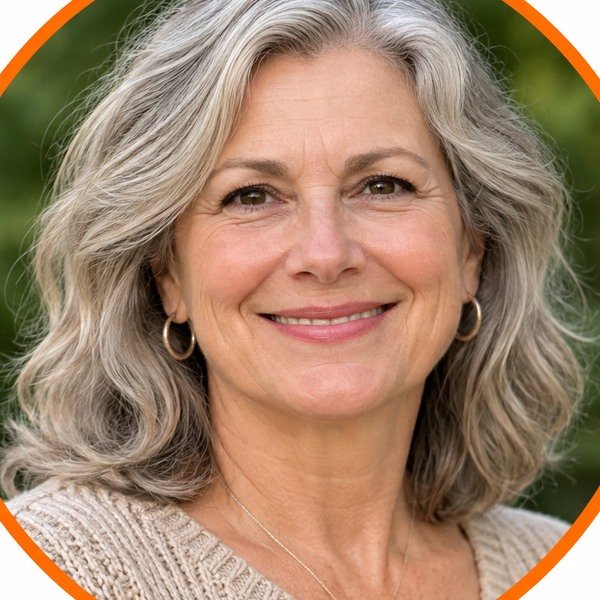
I took the box. I knelt, slowly, because my knees are sixty-five years old, and I looked at my grandson.
He had my mother’s eyes.
I did not cry. I smiled, and he smiled back, and the oldest one said, Happy birthday, Grandma, in a voice so careful it broke my heart open again.
We ate cake at the kitchen table, all of us, under sixty-six yellow balloons.
The weeks that followed were not dramatic. They were patient. Robert and I began counseling with a gentle woman named Dr. Imani Brooks, and some sessions were harder than anything I had ever done. I did not forgive him all at once. I let the time count for something, and he let it.
Marcus Webb helped me update my will, and Audrey’s name stands in it now, plainly, where it always should have been. I wrote to the agency to ensure that no letter in the registry would ever again go unopened.
In late November, Audrey and her family came for Thanksgiving. We set eight places at the table.
I did not take down the sixty-sixth balloon. I tied it to the front porch railing, where it stayed through the first frost, fading to the color of old butter.
I had counted sixty-six balloons that afternoon and called the police because I was sure I was counting a warning.
I had only been counting what was missing.
The sixty-sixth was my daughter, and she had come home.