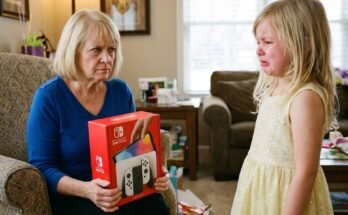
My Husband Took My Phone After His Mother Injured Me, Then Left Me on the Kitchen Floor
“Put that phone down. Nobody is calling an ambulance.”
My husband ripped my phone out of my hand while I sat on our kitchen floor, unable to stand. His mother stood beside him, still clutching the wooden rolling pin she’d used on my leg.
“She brought this on herself,” my mother-in-law said.
Instead of helping me, Neil locked my phone in a kitchen drawer and told me to quit making trouble. Then he strolled into the dining room and sat down to eat.
My name is Laura Bennett. I was twenty-nine, a senior financial analyst, and I’d been married to Neil for four years. Until that evening, I’d convinced myself that the friction between his mother and me was something we could eventually work out. I had no idea how wrong I was.
It began when Helen criticized the dinner I’d made, complaining that I’d ignored her instructions. When I politely said I could make my own decisions in my own kitchen, her face hardened.
“You think earning more than my son gives you the right to disrespect me?”
I tried to walk away rather than argue. Helen snatched the rolling pin from the counter and swung it at my leg, knocking me into the cabinets before I crumpled onto the tile.
The pain was instant. I couldn’t put any weight on my leg, and every attempt to move made me nauseous.
Neil came in moments later, but instead of asking whether I was hurt, he demanded to know what I’d said to upset his mother.
“Please, Neil. I need a hospital.”
“You deserved it for disrespecting my mother.”
His father stood nearby and did nothing. When I reached for my phone, Neil took it and locked it in the drawer.
“You can think about your attitude tonight. We’ll deal with this tomorrow.”
They left me there.
From the dining room I heard plates clinking and the television switching to a football game. Helen laughed at something Neil’s father said while I struggled to sit upright. I called Neil’s name several times. Nobody came.
After what felt like hours, I heard him telling his father that I needed to learn who made the rules in their family. That was when I stopped expecting my husband to help me.
The back door was only a few feet away, but reaching it took nearly everything I had. I dragged myself across the floor, stopping whenever the pain grew unbearable. The old security grate by the rear entrance had a damaged latch. I found a small tool in a nearby drawer and worked at the mechanism until it finally gave.
Cold rain hit my face as I pulled myself outside.
Across the narrow yard lived Mrs. Young, an elderly widow who had always greeted me kindly. Her porch light was off, but I knew she was usually home in the evenings. I hauled myself through the wet grass toward her steps. By the time I reached her door, my hands were shaking so badly I could barely knock.
I struck the wood three times. A light came on inside. Then the door opened, and Mrs. Young looked down at me.
Her expression changed at once. She knelt beside me, grabbed her phone, and called emergency services while I struggled to explain what had happened. For the first time that night, someone believed I needed help.
And while Mrs. Young stayed beside me in the rain, neither of us realized that a nearby security camera had recorded the final moments of my escape.
Part 2: My Husband Claimed I Had Fallen, but the Hospital Found Evidence He Couldn’t Explain Away
I woke under the bright lights of a hospital room three days after Mrs. Young found me outside her house.
My injured leg had been treated and immobilized, and a nurse was checking my vital signs when I opened my eyes. Mrs. Young sat by the window, holding a paper cup of coffee.
“Oh, sweetheart,” she whispered when she saw me awake. “I was so worried.”
I tried to sit up, but she gently asked me to rest.
The doctors had confirmed my leg was fractured. They’d also documented the surrounding injuries and recorded the account I gave when emergency responders first brought me in.
A hospital social worker visited later that morning. She asked who had been present, how the injury happened, and whether anyone had kept me from getting medical attention. I answered each question as carefully as I could.
For years I’d played down Helen’s controlling behavior. She criticized my clothing, questioned my spending, and demanded that Neil approve decisions I made. Whenever I objected, Neil accused me of being disrespectful. But this was the first time I’d been seriously hurt.
The social worker explained that the hospital would preserve the relevant medical documentation and coordinate with the authorities. She also helped me contact an attorney named Susan Marsh.
Susan arrived that afternoon with a legal pad and a folder. “Your immediate safety comes first,” she told me. “After that, we need to preserve everything that supports your account.”
She said Mrs. Young had already given a statement to investigators. When emergency responders arrived, my neighbor had described finding me outside in the rain, unable to stand. Investigators had also spoken with Neil and his parents. According to Susan, Neil claimed I’d fallen during an argument.
“He says you lost your balance in the kitchen,” she explained.
I stared at her. “His mother hit me with a rolling pin. He took my phone so I couldn’t call for help.”
Susan wrote down my words. The medical findings alone couldn’t establish every detail of the confrontation, she said, but they raised serious questions about Neil’s explanation. Investigators were comparing the accounts with the physical evidence collected from the house.