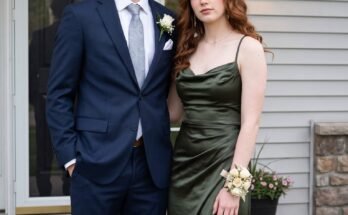
This time three people answered at once. Rosa said, “Mr. Langley.” Dr. Whitman said, “Enough.” And Annie said, “Yes, I do.”
Dale stopped. Annie walked toward him, not close, just close enough to be heard.
“You knew.”
He stared at her.
“You saw bruises.”
No answer.
“You heard him speak to me.”
His jaw worked.
“You told me to keep quiet because you were afraid of what people would think about your family.”
His eyes flicked toward the road. Toward the neighbors. Exactly. Annie noticed. A sad smile touched her swollen mouth.
“You’re still doing it.”
Dale’s face collapsed. Not dramatically. Just enough. For the first time, everyone standing there saw what mattered most to him. Not Annie. Not Trevor. The Langley name. And suddenly that name wasn’t protecting him. It was exposing him.
The investigation turned up more. Not another victim, not some convenient hidden crime. Something worse for Dale, because it came from his own arrogance. For years Trevor had sent his father messages after fights with Annie, and Dale had kept them. He believed they proved Annie was difficult. Instead they documented a pattern. Trevor admitting he’d “lost it.” Dale telling him to “keep domestic problems contained.” Trevor worrying Annie might go to the police. Dale answering that people in Dalton County knew which families could be trusted. The messages became part of the case.
The county development board held a public meeting soon afterward. Dale walked into a room where he’d commanded respect for fifteen years. This time nobody stood to greet him. Local property owners were there. County employees. Reporters. People who had once laughed at his jokes. Dale sat under fluorescent lights while the board chairman announced he was stepping down from leadership duties pending review of his conduct. Dale tried to interrupt. The chairman stopped him. Then a board member, a woman Dale had dismissed for years, asked a simple question.
“Did you tell your son that your family’s standing would prevent his wife from being believed?”
Dale stared at the microphone, hands trembling. “I was trying to preserve a marriage.”
Nobody rescued him. The room had finally learned what “preserve” meant. Preserve Trevor’s reputation. Preserve Dale’s influence. Preserve the family name. Annie had been the thing they were willing to break to preserve everything else.
Dale looked toward the back of the room. Annie was there. So was I. He saw us, and lowered his eyes. That was his downfall. Not humiliation for its own sake. Recognition. The man who’d spent years believing reputation was power finally understood that reputation without character was only a story people agreed to believe until the truth arrived.
Trevor eventually faced the consequences of his own documented actions. Annie filed for divorce. There were hearings. Statements. Lawyers. Hard mornings. Nights she woke screaming. Moments she missed Trevor and hated herself for it. In those moments I learned not to say, “How can you?” I learned to say, “I’m here.”
Healing wasn’t clean or triumphant. Sometimes it looked like Annie making it through breakfast without crying. Sometimes it was driving alone again. Sometimes it was hearing a truck outside and not freezing.
One afternoon, months later, I found her in the barn holding the old baseball bat, her fingers tracing those crooked letters. A.M.M.
“You remember doing that?” I asked.
She smiled. “You were furious.”
“I was not.”
“Mom was furious.”
“That’s accurate.”
Annie laughed, a real laugh. I hadn’t heard one in months. She looked at the bat. “Why did you take this that morning?”
I thought about lying. Then didn’t. “Because I was angry enough to want Trevor afraid. But I realized on his porch that if I hit him, I’d be doing exactly what he did.”
Her eyes filled.
“I needed to bring you home, not give you another violent man to worry about.”
She held out the bat. I shook my head. “Keep it.”
“For what?”
I smiled. “It has your initials.”
She rolled her eyes. “You’re still mad about that?”
“Absolutely.”
She hugged me. A small human victory. My daughter hugged me without apologizing.
A few weeks later Dr. Whitman came for dinner. Rosa Navarro stopped by too. Tommy brought peach cobbler his wife had made. Nothing fancy. Just people around my old kitchen table. Annie came downstairs last and paused when she saw everyone. One empty chair sat beside mine. She looked at it, then at me.
“You saved me a seat?”
“Always.”
She sat. Near the end of dinner she slipped upstairs and came back holding an envelope.
“Dad.”
She set it beside my plate. Inside was an old photograph. Annie at seven. Me behind her. My late wife laughing beside us. And Annie holding that same baseball bat, nearly twice her height. On the back, in my wife’s handwriting, were words I’d never noticed.
For Art, because someday our girl will need to know that strength means making her feel safe enough to come home.
I read it twice. Then a third time. Annie leaned against my shoulder.
For months I’d thought that bat stood for the worst night of my life, the night I almost let rage decide what kind of father I’d be. But my wife had bought it decades earlier with an entirely different meaning. Not violence. Safety. Home.
I looked around the table. At Dr. Whitman. Rosa. Tommy. At Annie eating cobbler beside me, the porch light glowing beyond the kitchen window. Trevor had told her nobody would believe her because her father was nobody. He’d been wrong about something much bigger than me. Annie never needed a powerful father. She needed people willing to believe her. A doctor who documented the truth. A deputy who listened. Neighbors who refused to look away. And a father who understood that protecting his daughter didn’t mean swinging a bat. It meant standing beside her while she found her own voice again.
Later that night Annie carried her plate to the sink. I reached for it. She pulled it away. “I’ve got it, Dad.” Then she kissed my cheek. “Go sit down.”
I did. Through the kitchen window I could see the porch where she’d arrived barefoot and bleeding. It was quiet now. Warm yellow light spilled across the boards. The old baseball bat rested beside the door, her childhood initials still carved into its worn handle. And upstairs, for the first time in a very long while, I heard my daughter singing softly to herself.
I closed my eyes and listened.
She was home.