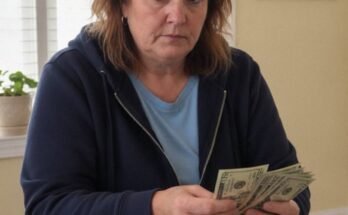
My boss dumped 91,500 pennies covered in dirty motor oil onto my driveway to humiliate me after I quit my job, but when my eight-year-old son learned what I planned to do with the money, our family turned his cruel punishment into something that changed an entire town. It happened at four o’clock on a Friday afternoon. Dale Heckert backed his pickup into my driveway outside Merrill, Wisconsin, and began emptying buckets of pennies onto the gravel. The noise was unbelievable, like a storm of metal striking the ground. By the time he finished, a mountain of copper coins covered the driveway, every penny coated in sticky black oil. My son Noah, eight, and daughter Lily, five, stood beside me, staring at the mess. Dale taped my final pay stub to an empty bucket, placed it on top of the pile, and said, “Paid in full. Count it.” Then he climbed into his truck and drove away. I’d worked for him for six years, never missed an important deadline, and even left a thirty-page guide to help my replacement. All I’d done was accept another job that offered health insurance for my children. That night, my husband Jake called from his trucking route and offered to borrow a trailer and dump every penny back outside Dale’s repair shop. I refused. I knew Dale wanted me angry, humiliated, and desperate enough to beg him for a normal paycheck. Instead, the next morning, I carried a blue plastic tub onto the driveway, filled it with warm water and dish soap, and started washing the coins. Noah soon appeared wearing dinosaur pajamas and asked to help. Lily followed in pink rain boots, carrying her stuffed rabbit. We put on gloves, spread an old picnic blanket on the grass, and began scrubbing pennies with toothbrushes. I had no idea that those little hands would teach me what to do with the money—or that my former boss would eventually return to apologize in front of everyone.
My name is Becky Lindahl. I’m thirty-four years old, married to a hardworking truck driver named Jake, and raising our two children in a little yellow house on five acres near Merrill. For six years, I managed the parts counter at Heckert Auto & Diesel, ordering supplies, answering phones, and finding replacement parts for everything from farm trucks to heavy diesel engines. Dale Heckert, my sixty-one-year-old boss, wasn’t a friendly man, but I worked hard and knew the business better than almost anyone. Then our family’s health insurance costs increased by $300 a month, and the deductible doubled. Noah has asthma and needs medication and specialist appointments, so reliable coverage wasn’t something we could ignore. When the Lincoln County Farmers Co-op offered me a parts and inventory position with family health insurance, I accepted and gave Dale two weeks’ notice. He barely spoke to me afterward. On my final Friday, instead of depositing the $915 he owed me, he delivered it in greasy pennies. I couldn’t simply throw the money away. My first paycheck from the new job wouldn’t arrive for two weeks, and we needed groceries, gas, and Noah’s next inhaler refill. But converting 91,500 dirty pennies into usable money was a nightmare. The grocery store’s coin machine charged nearly twelve percent, and the bank required the coins to be rolled. That meant washing and counting every penny, fifty coins at a time, for a total of 1,830 rolls. Noah and Lily helped after school while I worked evenings, and Jake eventually joined us when he returned from his route. Our hands became sore, my knees bruised from kneeling on gravel, and our porch filled with shoeboxes of neatly wrapped coins. Then Noah asked me something unexpected. A boy named Mason in his second-grade class had received a plain cheese sandwich because his lunch account had run out of money. The school served those children on different-colored trays, and other students had started calling Mason “Cheese Boy.” Noah asked whether we could use some of our pennies to help him. I called the school cafeteria and spoke with Mrs. Fogle, who’d worked there for thirty-one years. She explained that twenty-three second graders had negative lunch balances totaling $908.40. I looked at the $915 scattered across my driveway and realized we had almost exactly enough to clear every debt. I told her I wanted to pay the entire amount. What I didn’t know was that the school would publicly thank us, the story would spread through Merrill, and Dale Heckert would recognize something from his own childhood in those pennies.